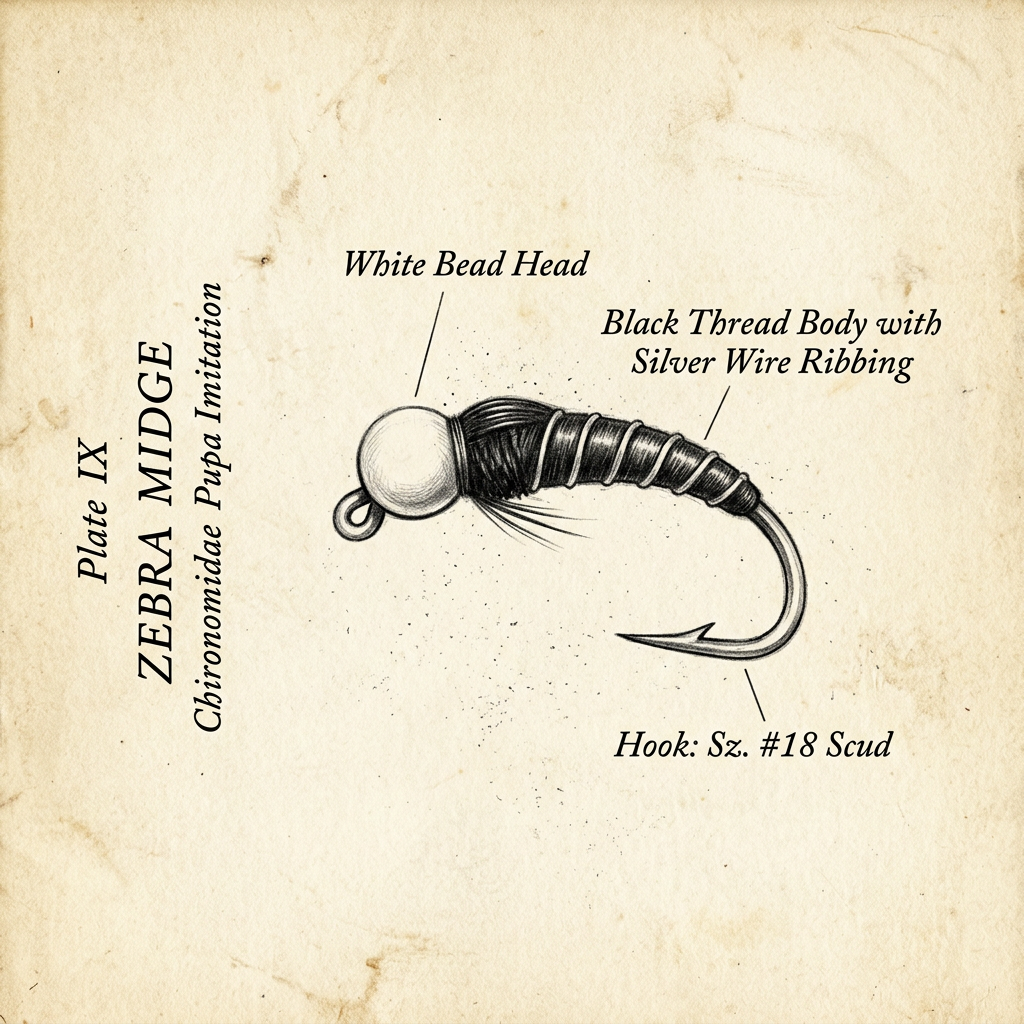
Plate III: Zebra Midge — silver bead, black thread body, silver wire rib. Size 20 scud hook.
Four materials. Five minutes at the vise. And it catches more trout on Colorado tailwaters than patterns that take ten times as long to tie. The Zebra Midge belongs in every fly box, period.
Plate III: Zebra Midge — silver bead, black thread body, silver wire rib. Size 20 scud hook.
Midges (Chironomidae) are the most abundant aquatic insect on every trout stream in Colorado. They hatch year-round, including the dead of winter when nothing else is active. The Zebra Midge imitates a midge pupa — the stage between larva and adult — and it is arguably the single most productive fly pattern on Colorado tailwaters.
Fish this pattern when:
That's it — four materials. The Zebra Midge is one of the simplest and most effective patterns you can tie. Perfect for beginners learning thread control and wire ribbing technique.
Slide a 2mm silver or black bead onto the hook with the small hole facing the eye. Place the hook in your vise. Start your thread behind the bead and wrap a few tight turns to secure it in place, then wrap back to the bend of the hook in smooth, touching turns.
Tie in a 3-inch piece of silver wire at the bend of the hook. Wrap your thread forward to behind the bead in smooth, touching turns. This thread underbody IS the body of the fly — keep it even, thin, and slightly tapered. Don't overdub or add anything; the thread alone creates the slim midge pupa profile.
Wrap the silver wire forward in evenly spaced spiral turns — 5 to 7 wraps depending on hook size. The wire creates the segmented "zebra stripe" that gives this fly its name. Tie off behind the bead with several tight thread wraps and helicopter the tag end to break it off cleanly. Even spacing is key — take your time here.
Build a small thread collar behind the bead with 4–5 wraps. This collar imitates the slightly enlarged thorax of a midge pupa. Whip finish behind the bead, trim the thread, and apply a thin coat of head cement or UV resin over the entire thread body. The finish adds durability and gives the body a subtle translucent sheen that midges naturally have.
Black thread with a silver wire rib is the most versatile and productive color on Colorado tailwaters. Red is excellent in winter and early spring. Olive works well during summer months. Most experienced Colorado anglers carry all three colors in sizes 18–22.
Size 20 is the all-around best choice for Colorado tailwaters. Use size 18 in faster water or when larger midges are hatching. Go to size 22 on heavily pressured water like Cheesman Canyon or the Blue River in low, clear conditions.
Fish it as a dropper behind a larger nymph or under an indicator. Set your depth to within 6 inches of the bottom. In tailwaters, dead-drift it through runs and seams. During midge hatches, try suspending it just below the surface under a small dry fly — trout often take ascending midges in the top 12 inches of the water column.
Gold Medal tailwater. Midges year-round, especially productive in winter.
Trophy water. Midge hatches fuel winter and spring fishing.
Technical catch-and-release. Size 22 Zebra Midges are standard here.
Colorado's longest Gold Medal stretch. Great winter midge fishing.
Live scores, hatch updates, and which patterns are working right now. Free every Thursday morning.