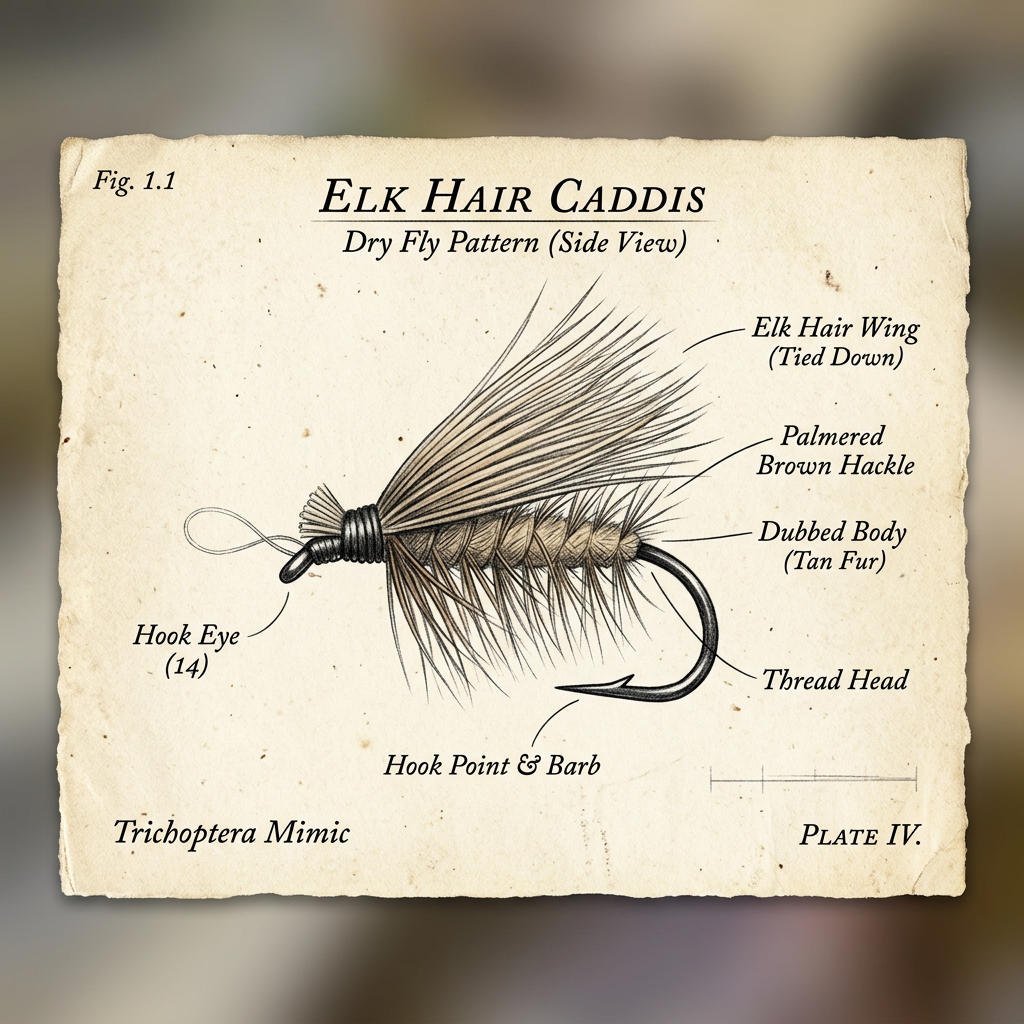
Plate IV: Elk Hair Caddis (Trichoptera Mimic) — elk hair wing, palmered brown hackle, dubbed tan fur body. Size 14 dry fly hook.
The definitive Colorado caddis imitation. Buoyant, visible, and deadly on every freestone river from the Eagle to Gore Creek. Al Troth's design hasn't been improved in 50 years.
Plate IV: Elk Hair Caddis (Trichoptera Mimic) — elk hair wing, palmered brown hackle, dubbed tan fur body. Size 14 dry fly hook.
The Elk Hair Caddis is the first dry fly you should learn to tie for Colorado. Caddisflies (Order Trichoptera) are the most abundant aquatic insects on Colorado's freestone rivers, and this pattern imitates the adult stage better than anything else in your box.
Colorado's caddis hatches start in late May at lower elevations and push into October on high-country water. Unlike mayflies, caddis are active — they skitter, flutter, and bounce off the surface. The Elk Hair Caddis mimics that energy with its buoyant elk hair wing and palmered hackle that rides high in fast water.
It's most effective in these situations:
Place the hook in your vise. Start your thread behind the eye and wrap back to the bend in smooth, touching turns. Tie in a 4-inch piece of fine gold wire at the bend — this will reinforce the body and add a subtle segmentation that mimics the natural caddis abdomen.
Apply a thin amount of tan or olive dubbing to your thread. Less is more — the body should be slim and slightly tapered, thicker toward the front. Wrap forward in tight turns, stopping about two-thirds up the shank. Leave plenty of room for the hackle and wing.
Wrap the gold wire forward in 4–5 evenly spaced spiral turns through the dubbed body. The wire reinforces the dubbing against fish teeth and adds visible segmentation. Tie off with 3–4 tight thread wraps and helicopter the excess wire to break it cleanly.
Select a brown or furnace hackle with barbs roughly equal to the hook gap. Tie it in by the butt at the front of the dubbed body. Palmer the hackle rearward in 4–5 evenly spaced turns, then secure the tip by catching it with the gold wire during ribbing (or tie off separately). Trim excess. The palmered hackle gives the fly its signature buoyancy.
Cut a pencil-diameter clump of elk body hair from the hide. Remove the underfur and short hairs with your fingers or a small comb. Place the hair tips-first in a hair stacker and tap firmly 5–6 times to align the tips. Measure the wing to extend just past the hook bend. Hold the hair on top of the shank and make 3–4 tight pinch wraps to secure. The hair will flare slightly — that's fine, but keep it on top.
Trim the elk hair butts at a slight angle to form a neat, tapered head. The trimmed butts create the characteristic caddis head profile. Build a small thread head over the cut ends, whip finish with 3–4 turns, and apply a drop of head cement. The head should be compact — don't crowd the eye.
Size 14 is the best all-around choice. During heavy caddis hatches on the Eagle River or Gore Creek, match the hatch with sizes 12–16. On technical tailwaters like the Blue River, go smaller with a 16 or 18.
Caddis hatches typically peak from late May through September. The best dry fly action happens in the evening hours when adult caddis are skittering across the surface. The Eagle River and Gore Creek have excellent caddis hatches throughout summer.
Dead-drift through riffles and runs, but don't be afraid to add a twitch. Caddis are active insects that skitter across the surface, so a slight drag or skate can trigger more strikes than a perfect dead-drift. In the evening, try skating the fly across the surface in a downstream swing.
Freestone river through Eagle County. Excellent caddis hatches all summer.
Urban trout fishery running through Vail. Pocket water and riffles.
Gold Medal tailwater below Dillon Dam. Technical nymphing for large browns.
Freestone stream through Frisco. Great pocket water for dry flies.
Live scores, hatch updates, and which patterns are working right now. Free every Thursday morning.