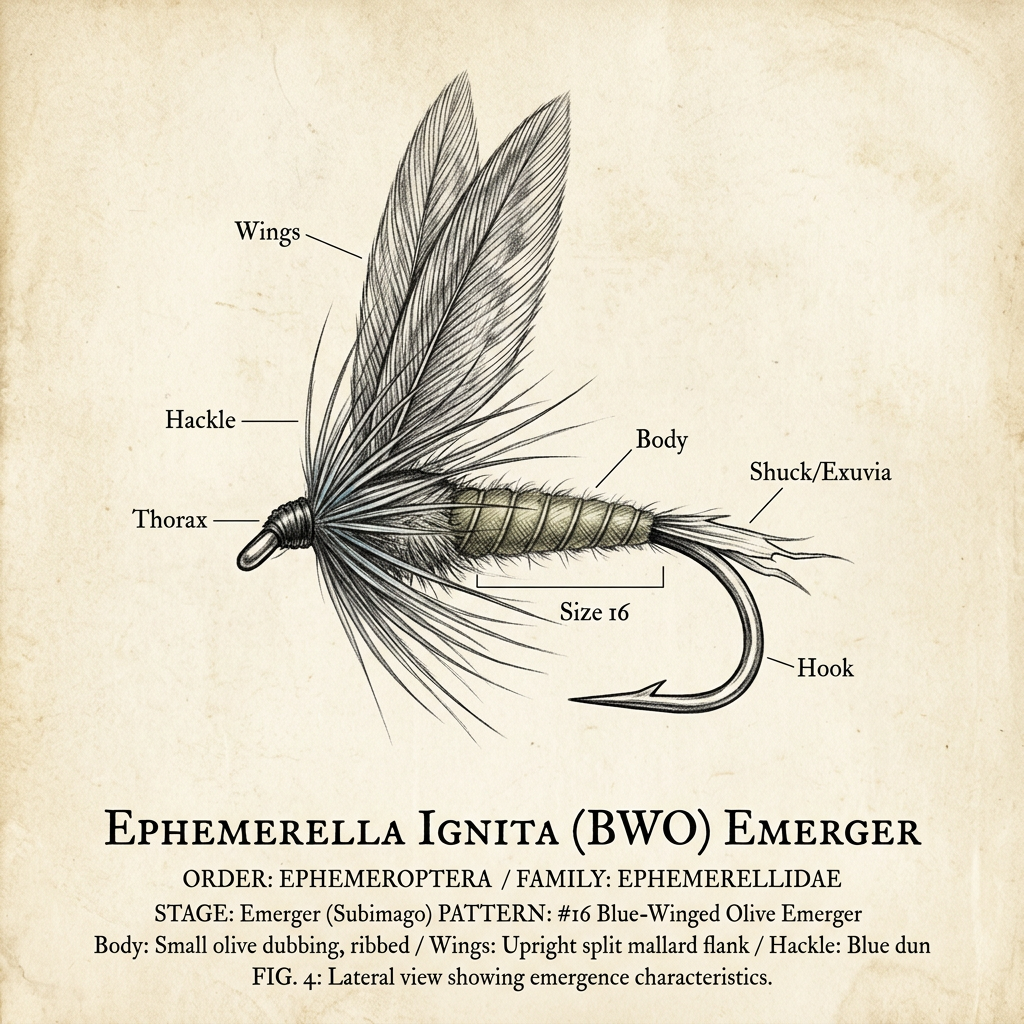
Plate IV: BWO Emerger (Baetis spp.) — pheasant tail trailing shuck, olive-brown dubbed abdomen, dark dun CDC wing. Size 20 emerger hook.
Blue-Winged Olives are the first and last major mayfly of the Colorado season. When the sky goes gray and the barometer drops, Baetis emergers become the most important fly in your box.
Plate IV: BWO Emerger (Baetis spp.) — pheasant tail trailing shuck, olive-brown dubbed abdomen, dark dun CDC wing. Size 20 emerger hook.
Blue-Winged Olives (Baetis) are the bookend mayflies of the Colorado fishing season. They hatch in spring (March through May) and again in fall (September through November), filling the gaps when other hatches are absent. Unlike most mayflies, BWOs hatch best on overcast, drizzly days — the worse the weather looks, the better the fishing gets.
The emerger stage is critical during BWO hatches because Baetis nymphs are small and struggle in the surface film. Trout learn to pick them off during this vulnerable moment rather than waiting for the fully emerged dun. On pressured Colorado tailwaters, the emerger consistently outfishes the dry fly.
Fish this pattern when:
Place the hook in your vise. Start your thread behind the eye and wrap back to the bend. Select 4–5 pheasant tail fibers and tie them in at the bend, extending about half a shank length past the hook. The trailing shuck imitates the nymphal skin the Baetis is shedding as it emerges through the surface film.
Tie in a 3-inch piece of fine copper wire at the bend alongside the shuck. Copper complements the olive tones of the body better than silver on this pattern.
Apply olive-brown dubbing thinly to your thread. Wrap forward to the midpoint of the shank in smooth, touching turns. Keep the abdomen slim and slightly tapered. Baetis are tiny insects — on a size 20 hook, the abdomen should barely be thicker than the thread underbody.
Wrap the copper wire forward in 4–5 evenly spaced spiral turns through the dubbed abdomen. Tie off behind the midpoint and helicopter the tag end. The copper rib adds segmentation and a warm undertone that matches natural Baetis nymphs.
Apply dark olive dubbing slightly more generously than the abdomen. Wrap a fuller thorax from the midpoint to just behind the eye. The thorax should be noticeably thicker — it represents the bulging wing case of the emerging dun. Leave enough room behind the eye for the CDC wing and a small thread head.
Select a dark dun CDC feather with full, buoyant fibers. Tie it in by the butt on top of the thorax so the feather tips extend back over the body, reaching about to the bend. The dark dun color matches the wing of emerging Baetis. Trim the butt, build a small thread head, whip finish, and apply a drop of head cement to the thread head only. Keep cement away from the CDC fibers.
Blue-Winged Olives have two main hatching periods in Colorado: spring (March through May) and fall (September through November). The strongest hatches occur on overcast, drizzly days. BWOs are the first major mayfly hatch of the year and the last, making them bookend patterns for the season.
Size 20 is the standard for most Colorado BWO hatches. Spring Baetis tend to be slightly larger (size 18–20), while fall hatches often run smaller (size 20–22). On pressured tailwaters, always err toward the smaller size.
Overcast, cool, drizzly days produce the best BWO hatches. Unlike most mayflies that prefer sunny conditions, Blue-Winged Olives hatch heaviest when the sky is gray and the barometer is falling. Snow flurries in spring and fall can trigger epic BWO emergences on Colorado tailwaters.
Colorado's longest Gold Medal stretch. Outstanding spring BWO hatches.
Gold Medal tailwater below Dillon Dam. Reliable BWOs spring and fall.
Legendary tailwater. Some of Colorado's most technical BWO fishing.
Trophy water. BWO hatches fuel the spring and fall shoulder seasons.
Live scores, hatch updates, and which patterns are working right now. Free every Thursday morning.